

U.S.-Iran Conflict Escalates as Both Sides Exchange New Attacks

Tensions between the United States and Iran have reached their highest level in months as both nations continue to exchange military strikes across the Middle East, raising fears that the conflict could spiral into a broader regional war.
By Christopher Todd
Reporting from Huntsville, Texas, USA
July 15, 2026 Updated 4:03 a.m. ET
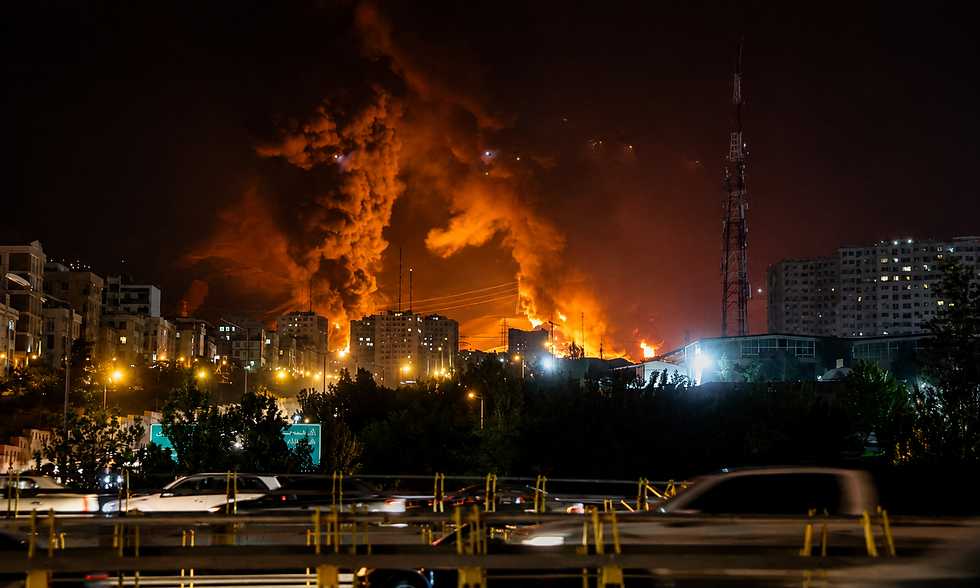
The latest escalation began after the United States launched a new round of airstrikes against Iranian military targets. According to U.S. officials, the strikes were intended to hold Iranian forces accountable for attacks on commercial shipping and American interests in and around the Strait of Hormuz, one of the world's most important energy corridors. U.S. Central Command stated that the operation targeted military infrastructure, missile sites, and command facilities believed to be involved in recent attacks against American and allied assets.
Iran responded quickly. Iranian forces launched missile and drone attacks against locations associated with U.S. military operations in the Gulf region, including targets in Bahrain, Kuwait, and other neighboring countries that host American forces. Regional air defense systems were activated as missiles and drones crossed Gulf airspace, while governments throughout the region warned of the growing danger of a wider conflict.
At the center of the dispute remains the Strait of Hormuz. Roughly one-fifth of the world's oil supply passes through the narrow waterway, making it one of the most strategically important shipping routes on the planet. The United States has reimposed measures aimed at restricting Iranian maritime activity, while Iran has threatened to disrupt energy exports throughout the region if the pressure campaign continues. Those threats have sent oil markets into a period of volatility as traders assess the possibility of supply disruptions.
Reports from the region indicate that recent U.S. strikes hit military facilities in southern Iran, including areas near Bandar Abbas and other strategic locations tied to Iran's military infrastructure. Iranian authorities reported casualties and injuries from the attacks and accused Washington of undermining diplomatic efforts. American officials, meanwhile, maintain that the strikes are defensive in nature and are intended to deter future attacks on U.S. forces and international shipping.
The conflict has also drawn concern from international organizations. The United Nations has warned that renewed hostilities threaten civilians across the Middle East and could disrupt the flow of food, medicine, and other critical supplies. Human rights officials have urged both sides to exercise restraint before the violence expands further.
Despite the increasingly aggressive rhetoric, analysts note that both Washington and Tehran appear to be pursuing a strategy of calibrated escalation. Each side is demonstrating military capability while attempting to avoid a full-scale war. However, military experts caution that the danger of miscalculation is growing with every new strike and retaliation. A single attack causing significant casualties could quickly push the region beyond the current cycle of limited exchanges.
For now, diplomacy remains stalled, missiles continue to fly, and the world is watching the Strait of Hormuz closely. As long as both sides continue trading attacks, the possibility of a much larger conflict remains a very real concern.

Comments