

Trump’s Greenland Deal Gives U.S. More Military Access, but No Ownership

President Donald Trump spent months arguing that the United States needed Greenland. On Tuesday, he signed an agreement that expands America’s military role on the Arctic island while leaving its sovereignty where it was: with the Kingdom of Denmark and the people of Greenland.
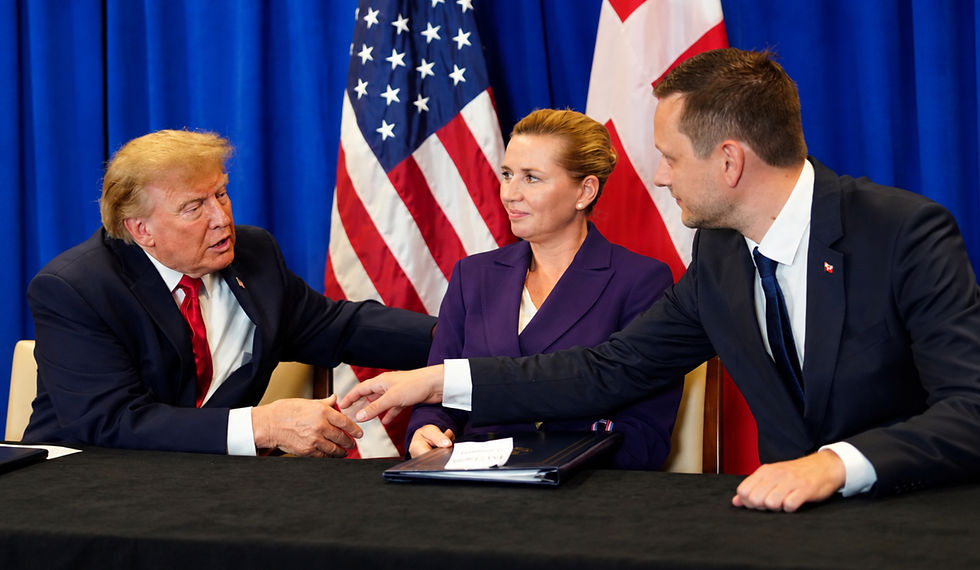
The agreement, signed in New York by Trump, Danish Prime Minister Mette Frederiksen and Greenland Prime Minister Jens-Frederik Nielsen, permits the United States to strengthen its existing Pituffik Space Base and develop military facilities at Narsarsuaq and Mestersvig. It also provides a process for proposing additional sites. The pact amends a 1951 defense agreement that has governed the U.S. military presence in Greenland for decades.
The deal is a political victory Trump can point to. Greenland sits along a strategically important route between North America and Europe, and the agreement allows for a proposed U.S. “Golden Dome” missile defense system on the island. It also prevents countries outside NATO from establishing military installations there without an exception agreed to by the parties. Limits on foreign investment in sensitive industries cover areas such as infrastructure and resource extraction.
But the agreement is different from the takeover Trump once sought. It does not transfer Greenland to the United States or give Washington unlimited authority to build wherever it chooses. Denmark and Greenland retain a role in reviewing requests for further facilities. The deal has no end date, though the parliaments of Denmark and Greenland must still approve it.
That compromise follows a difficult stretch for relations among the three governments. Trump’s earlier refusal to rule out force or economic pressure to acquire Greenland caused alarm in Denmark and Greenland, whose leaders insisted the island was not for sale. Frederiksen has framed the new arrangement as a way to strengthen Arctic security while respecting Greenland’s right to self-determination. Nielsen has emphasized the importance of NATO, but acknowledged that Greenlanders will need time to rebuild trust with the United States.
The agreement also raises a practical question: how much will the American presence grow? Trump has spoken of two major bases, but construction plans and any requests for facilities beyond those named in the pact remain to be worked out. Signing the agreement settles the immediate diplomatic dispute; it does not put new bases on the ground overnight.
For each side, the outcome offers something tangible. Trump gains a route to a larger and potentially lasting U.S. military presence. Denmark and Greenland avoid a transfer of territory and retain a say over future expansion. Whether the arrangement becomes a durable partnership will depend on parliamentary approval, the decisions that follow it and Washington’s ability to restore the trust strained by its earlier threats.


Comments