

The Starter Home Is Disappearing: For generations, a modest house was the gateway to the American middle class. Increasingly, young buyers are discovering that the gateway has a much higher price of a
For millions of Americans, the first house was never supposed to be the dream house. It might have had two bedrooms, a cramped kitchen, one bathroom and a backyard that needed work. The appliances were old. The neighborhood wasn't glamorous. There was probably a list of improvements waiting for the new owner. That was the point.
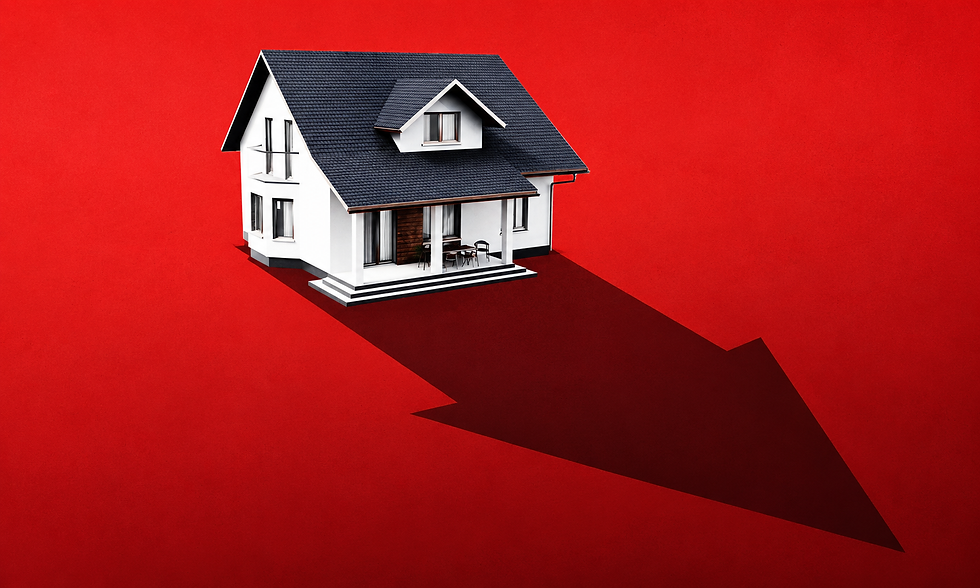
The starter home gave ordinary working people an affordable entrance into homeownership. They could purchase something modest, make payments, build equity and eventually trade up.
Today, that familiar path is becoming increasingly difficult to follow.
In 2026, the typical starter home costs approximately $344,000, up from about $256,000 in 2019. More importantly, the estimated household income necessary to afford one has jumped from roughly $43,000 to $78,000 during the same period.
For young Americans attempting to buy their first home, the math has fundamentally changed.
There Are Fewer Cheap Houses
Part of the problem is that America simply doesn't have the same supply of inexpensive houses it once did.
In June 2019, more than half of active homes for sale nationally were priced below $350,000. Today, that figure is just 37.6 percent—representing roughly 300,000 fewer affordable listings than before the pandemic.
Even the houses traditionally associated with first-time buyers have become substantially more expensive. Since 2019, prices for two-bedroom listings have increased 44.5 percent, while three-bedroom properties have risen 41 percent.
That leaves buyers facing a strange housing market: the houses may still look like starter homes, but increasingly they don't have starter-home prices.
Interest Rates Changed the Equation
Then there is the mortgage.
During the era of extremely low interest rates, buyers could borrow hundreds of thousands of dollars relatively cheaply. A higher-rate environment changes what that same house costs every month.
A $300,000 mortgage near 3 percent and one above 6 percent may have the same principal balance, but they produce dramatically different monthly payments.
The National Association of Realtors recently estimated that a first-time buyer purchasing a $369,700 home with 10 percent down would face a mortgage payment of approximately $2,158 per month—nearly 36 percent of income. And that doesn't include property taxes, homeowners insurance, maintenance or association fees.
In states like Florida, insurance can make the calculation even more difficult.
The result is that buyers who might technically qualify for a mortgage can still find homeownership financially uncomfortable.
A Generation Stuck on the Sidelines
The consequences extend beyond where people live.
Young adults are staying with parents longer. Couples are postponing purchases. Families are moving farther from major employment centers, considering townhouses or condominiums, or accepting multigenerational living arrangements.
Some will simply continue renting.
That matters because a house has traditionally been more than shelter. For middle-class Americans, it has also been a forced savings account.
Every mortgage payment can increase an owner's equity. Appreciation can create wealth that later becomes the down payment on a larger house, money for retirement or an asset passed to children.
Someone who buys a house at 28 potentially has decades to accumulate that equity. Someone unable to enter the market until 40 loses valuable years of potential wealth creation.
That is what makes the shrinking starter-home market a larger economic story.
There is some encouraging news. Affordable inventory has recovered from the lows reached during the pandemic-era housing frenzy, with particularly noticeable improvements in parts of the South and West. But the fundamental problem remains.
America still builds and sells houses. What it increasingly struggles to provide is the inexpensive first house that allows a young teacher, police officer, mechanic, nurse or office worker to become an owner without already possessing significant wealth.
The starter home was never supposed to be impressive.
It was supposed to be attainable.
And for a growing number of Americans, that may be precisely what has disappeared.


Comments