

Why Investors Are Starting to Look at Huntsville

Population growth, Interstate 45, Sam Houston State University and a wave of new development are changing the investment equation in Huntsville.
HUNTSVILLE, Texas — For decades, Huntsville’s economy has been defined largely by two institutions: Sam Houston State University and the Texas prison system. But increasingly, developers and investors are looking at the city for another reason — growth.

New housing, commercial construction, hotels, restaurants and retail projects are gradually changing the landscape of this East Texas community. Positioned along Interstate 45 approximately 70 miles north of Houston, Huntsville offers something becoming increasingly difficult to find closer to the Houston metropolitan area: room to grow.
The result is a city beginning to attract investment that might once have bypassed Huntsville for larger markets.
One of Huntsville's greatest advantages is Interstate 45. The highway provides direct access south to Houston and north toward Dallas, putting businesses in a community connected to two of the country's largest metropolitan economies.
But location is only part of the equation.
Sam Houston State University provides Huntsville with a relatively unusual economic foundation for a city its size. Thousands of students arrive each year, creating continuous demand for apartments, restaurants, entertainment and retail. The university also employs faculty and staff while attracting visitors for football games, graduations and other events.
At the same time, residential development is expanding.
The Huntsville Press reported in July that projects including The Reserves at Huntsville are adding new single-family housing as developers respond to population and economic growth. Every new rooftop potentially strengthens the argument for additional restaurants, grocery stores, medical offices, service businesses and retailers.
Evidence of that investment can already be found in city development records.
Huntsville's major-project list has included millions of dollars in private and public construction, including a new Holiday Inn Express, professional and medical office buildings, apartments, retail space and warehouse projects. A John Deere dealership was listed at a $6 million valuation, while an EquipmentShare facility represented another $2.8 million project.
Those projects individually may not transform Huntsville. Collectively, however, they illustrate an economy attracting capital across several sectors.
A new hotel, for example, represents more than additional rooms. It suggests investors believe enough travelers, university visitors, businesspeople and tourists will come to Huntsville to support additional lodging.
The same principle applies to restaurants and retail.
The city's development records have included projects involving Texas Roadhouse, Domino's, retail construction and convenience-store development. Meanwhile, multifamily projects such as The Domain illustrate continued investment in housing.
Huntsville also retains characteristics that distinguish it from many rapidly expanding suburban communities. It has a recognizable downtown, a major university, substantial government employment and a history tied to figures such as Sam Houston.
That combination could become increasingly valuable as development pushes farther north from the Houston region.
The challenge will be managing that growth.
More homes and businesses mean additional demands on roads, utilities, public safety and city services. Poorly planned expansion could also threaten some of the small-town character that makes Huntsville attractive in the first place.
For investors, however, the calculation is relatively straightforward.
They are not necessarily investing in what Huntsville is today.
They are investing in what they believe Huntsville could become.
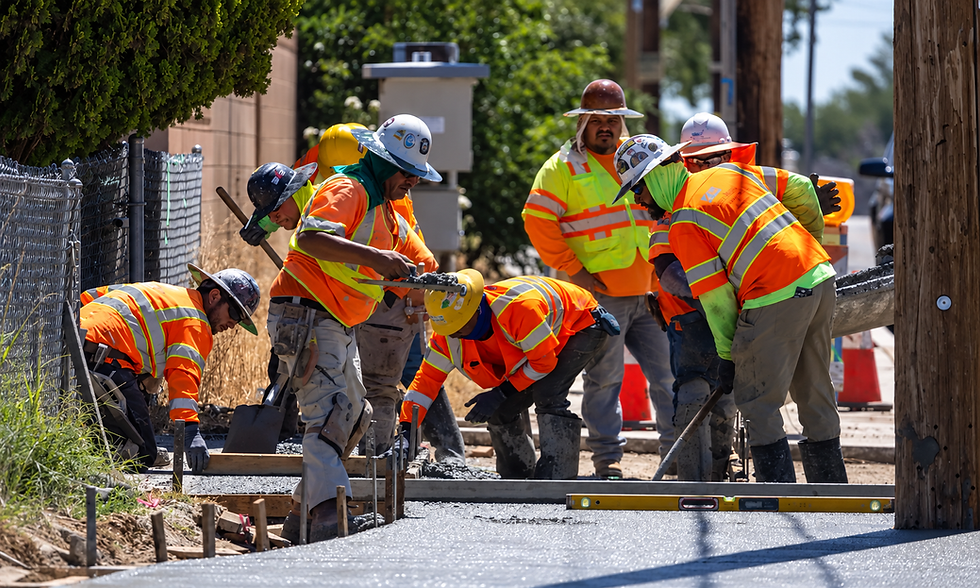
The cranes, construction sites and new subdivisions appearing around the city suggest more developers are willing to make that bet.
Huntsville may never become another Houston — nor would many residents want it to. But it doesn't have to.
If population growth continues and development follows, Huntsville could emerge as something different: a growing regional center positioned between small-town East Texas and one of America's largest metropolitan economies.
And increasingly, investors appear to be noticing.


Comments