

Has Houston's Bayou Mystery Moved to Austin?

For nearly a decade, Houston's bayous have produced a grim and steady stream of bodies. More than 200 people have been pulled from the city's waterways since 2017, with most deaths ultimately attributed to accidents, overdoses, suicides or drownings. Houston officials have consistently rejected any suggestion that a serial killer is behind the pattern.

Still, one name has surfaced repeatedly in reporting on the long-running investigation: Carl Clint Ashworth, a former long-haul truck driver whom sources familiar with the inquiry say detectives have examined for years. Ashworth has never been charged in connection with any bayou death. He has denied wrongdoing, and no law enforcement agency has publicly identified him as a suspect, let alone a serial killer.

What's changed recently is the emergence of a broader question: whether the Houston case might somehow connect to an unsolved 2017 triple homicide in Pearland and to a cluster of eight deaths in Austin's Lady Bird Lake. There is no forensic evidence linking the three, and no public evidence placing Ashworth in Austin at the time any of the Lady Bird Lake victims went missing. The theory has gained traction mainly because of one development: body recoveries from Houston's waterways slowed noticeably after Ashworth's last known formal interview with investigators in late 2025.
Investigators caution that the decline could reflect ordinary statistical variation, weather, or changes in patrol patterns rather than fewer deaths. Around the same time, a former neighbor named Bobby Letch said he hadn't seen Ashworth in more than six months. "I ain't sayin' he's responsible for them killings," Letch said, "but it's pretty strange that he just up and moved out like that."
Sources familiar with the Houston investigation say forensic evidence linked Ashworth to two women whose bodies were later recovered from local waterways. Ashworth has reportedly acknowledged contact with the women but said any biological evidence came from consensual encounters before their deaths. Detectives never placed him at the scenes where the bodies entered the water, and prosecutors never filed charges. DNA showing contact is not evidence of murder — a distinction investigators themselves have stressed.

Ashworth's name has also come up in connection with a 2017 Pearland case, in which Mark Hollis, Angela Ruiz and Ruiz's teenage son were found dead in their home with no forced entry and no clear motive.
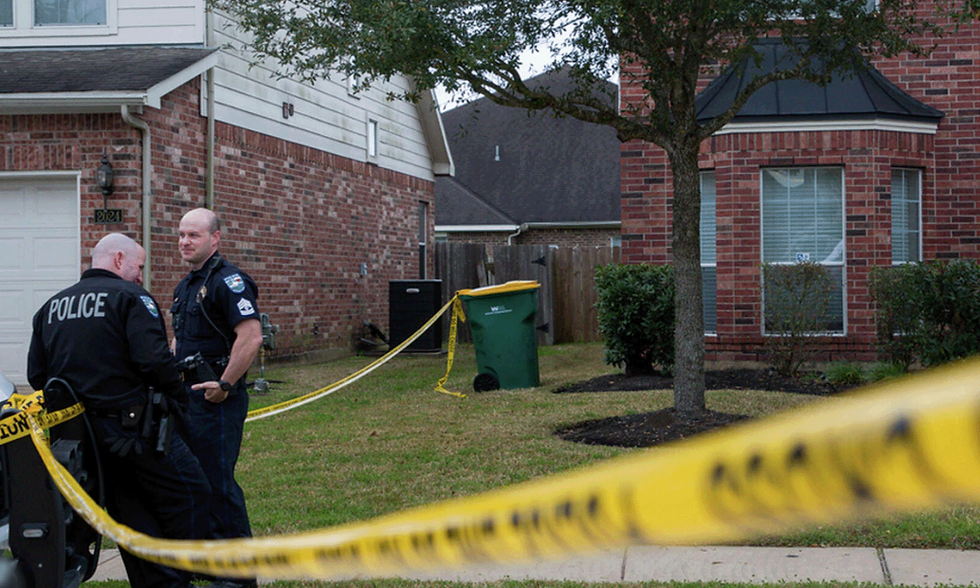
An anonymous tip alleged Ashworth once described details of the crime scene that hadn't been made public, but the tipster wouldn't cooperate further, and there's no DNA match, weapon or eyewitness tying him to the case. It remains unsolved.
In Austin, police and a Texas State University review of 189 drowning cases from 2004–2025 found no pattern supporting a serial killer near Lady Bird Lake. Critics of that broader analysis point instead to a narrower set of eight men — including Jason John and Jonathan Honey — whose deaths shared similarities: young or middle-aged, often drinking, last seen near the Rainey Street bar district before their bodies turned up in the lake.

The only reported link between Ashworth and Austin is a single eyewitness account: a bar employee near Rainey Street reportedly identified him, from a photo shown years later, as someone seen at the bar the night Jonathan Honey disappeared. An Austin police source was blunt about what that's worth: "Without something more tangible, we can't arrest him." A years-later ID from one witness doesn't establish involvement in a death.
No phone records, surveillance footage, vehicle data or forensic evidence has been publicly disclosed placing Ashworth in Austin during any of the disappearances. Houston and Austin authorities both maintain there's no evidence of a serial killer operating in either city.
What remains are three unresolved facts: three people murdered in a Pearland home with no conviction; a Houston bayou death toll that abruptly slowed after a specific interview; and eight demographically and geographically similar deaths in one Austin lake. Investigators say those overlaps may be coincidence, statistical noise, or simply the tragic result of alcohol and dangerous water at night. Whether they're something more is, by every official account so far, still an open question — and Ashworth, notably, has not been charged with anything.


Comments