

The Iran War is Strangling Qatar’s Economic Miracle

For decades, Qatar transformed itself from a quiet Gulf state into one of the richest countries on Earth through natural gas exports. Massive liquefied natural gas (LNG) shipments traveling through the Strait of Hormuz funded glittering skyscrapers, luxury developments, a world class metro system, and even the most expensive World Cup ever staged.
Now, war with Iran has brought much of that prosperity to a halt.

By James Lawson
Reporting from Huston, Texas, USA
May 15, 2026 Updated 8:11 a.m. ET
Since February, the closure of the Strait of Hormuz and Iranian attacks on critical infrastructure have effectively paralyzed Qatar’s economy. The country relies heavily on LNG exports, which account for more than 60 percent of government revenue. With shipping routes blocked, virtually no gas has left Qatar’s shores for more than two months. The impact has been devastating.
At Ras Laffan — Qatar’s massive gas-processing hub — production has largely stopped after Iranian missile and drone strikes damaged critical equipment, reducing output capacity by an estimated 17 percent. Analysts say even if the strait reopened tomorrow, it could take years for Qatar to fully recover.
The shutdown has crippled trade and tourism. Hotels, shops, and markets across Doha have grown quiet as foreign visitors disappear and multinational companies evacuate staff amid fears of regional instability. Growth forecasts have been sharply downgraded, and the International Monetary Fund now expects Qatar’s economy to shrink 8.6 percent this year.
The crisis has exposed Qatar’s dependence on a single economic lifeline. Since the 1990s, the country built its wealth by supercooling gas from the North Field — the world’s largest natural gas reservoir — and shipping it globally as LNG. By 2010, Qatar had become the world’s richest country per capita.

That wealth funded enormous modernization projects, including Lusail City, luxury malls, artificial-snow theme parks, and a $600 billion sovereign wealth fund with investments around the world.
But unlike neighboring Saudi Arabia and the United Arab Emirates, Qatar has no alternative pipeline routes bypassing the Strait of Hormuz, leaving the nation geographically trapped.
The war has also undermined Qatar’s long-term plan to diversify beyond fossil fuels. Before the conflict, the country aggressively promoted itself as a global tourism and business hub, hosting international sporting events and loosening restrictions on foreign companies.
Now, travel advisories and images of missile strikes have damaged Qatar’s reputation for stability — a critical factor in attracting foreign investment and expatriate workers, who make up roughly 90 percent of the population.
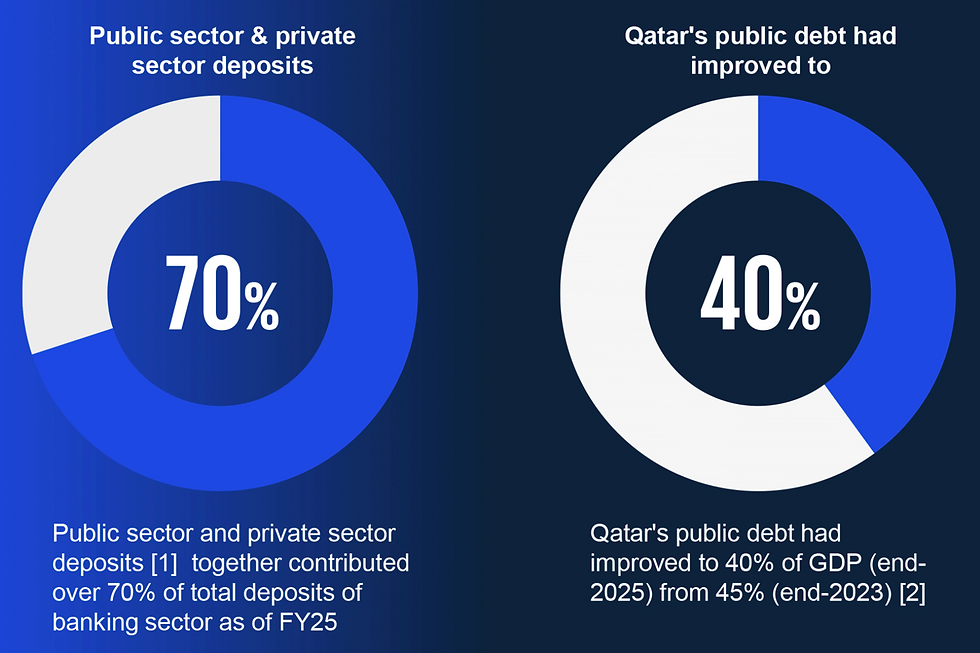
Despite the turmoil, the Qatari government has used subsidies and state reserves to prevent widespread panic. Food prices have risen only modestly despite severe supply chain disruptions. Economists say Qatar’s enormous financial reserves should allow it to continue funding salaries and essential services for years. Still, experts warn the longer the Strait of Hormuz remains closed, the greater the danger becomes.
“If there’s a migration out, then that starts to get quite scary,” analyst Ahmed Helal warned, noting that Qatar’s economy depends heavily on foreign workers and international capital.
For now, Qatar’s gleaming economic miracle remains intact — but increasingly fragile.


Comments