

Divided by Design? How Social Media Is Deepening America’s Political Rift

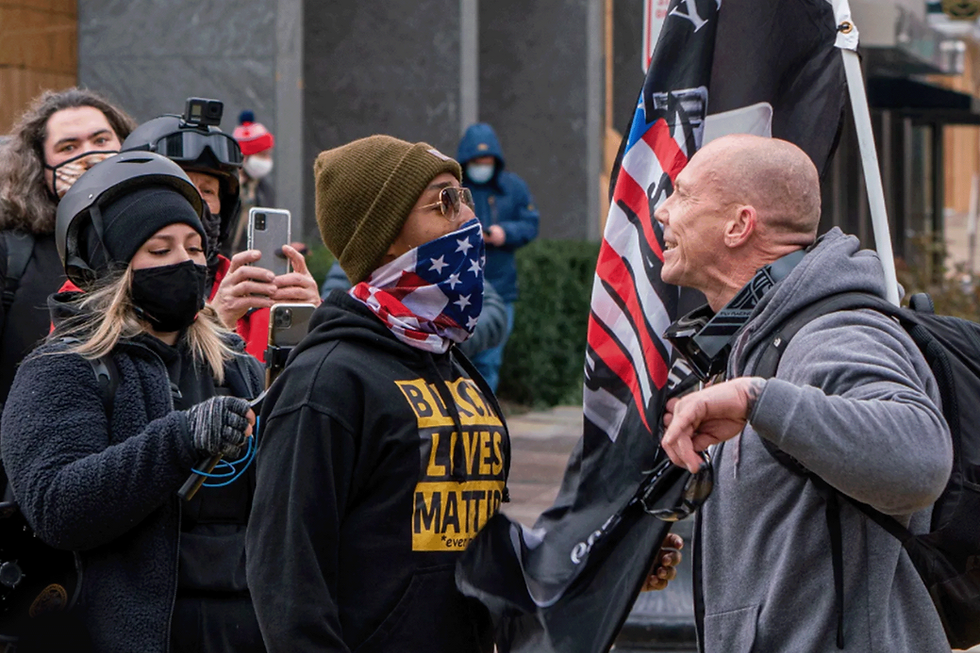
The United States is experiencing one of the most politically polarized periods in its modern history. Democrats and Republicans increasingly view one another not simply as political opponents, but as threats to the nation’s future. While disagreements have always been part of American democracy, experts warn that social media platforms are accelerating division by rewarding outrage, reinforcing ideological echo chambers, and encouraging increasingly hostile political behavior.
By David Johnston
Reporting from Auston, Texas, USA
May 11, 2026 Updated 10:11 p.m. ET
According to a 2023 survey by the Pew Research Center, 65 percent of Americans say politics leaves them feeling exhausted, while 55 percent report feeling angry when thinking about political issues.
Many researchers point to social media algorithms as a major contributor. These algorithms are designed to maximize user engagement, often by promoting emotionally charged content that keeps users clicking, sharing, and commenting. Pew researchers have warned that algorithm-driven platforms can encourage people to live in “echo chambers” where their existing beliefs are constantly reinforced.
Social psychologist Jonathan Haidt, one of the nation’s leading experts on polarization, argues that social media has fundamentally changed political discourse. “Social media is incredibly powerful for tearing things down,” Haidt said during a 2022 interview, adding that the platforms have generally “made things worse” for an already struggling democracy.
Haidt has also described modern social media as an “outrage machine,” arguing that algorithms frequently amplify anger and hostility because emotionally provocative content generates more engagement than thoughtful discussion.
Politicians from both parties have voiced similar concerns. Representative Alexandria Ocasio-Cortez recently warned that Americans are becoming “algorithmically polarized,” meaning users are increasingly exposed only to viewpoints that confirm their existing beliefs while rarely encountering opposing perspectives.
Recent academic research supports those concerns. Studies have found that exposure to highly partisan and anti-democratic content on social media can increase negative feelings toward political opponents and heighten emotions such as anger and resentment.
Yet some scholars caution against overstating the divide. Research suggests that Americans share more common ground than political rhetoric and social media feeds often imply. The loudest and most extreme voices frequently dominate online conversations, creating a distorted perception of widespread hostility.
As the nation approaches another election cycle, experts agree on one point: restoring healthy political dialogue will require Americans to look beyond algorithm-driven outrage and rediscover the common values that unite them.


Comments